Scene III · Bayeux itself
Bayeux by the Aure: old lanes, wheels and timber
The Aure runs through Bayeux's middle, where old lanes, turning mill wheels, timber-framed houses and a liberty tree make a compact walk.
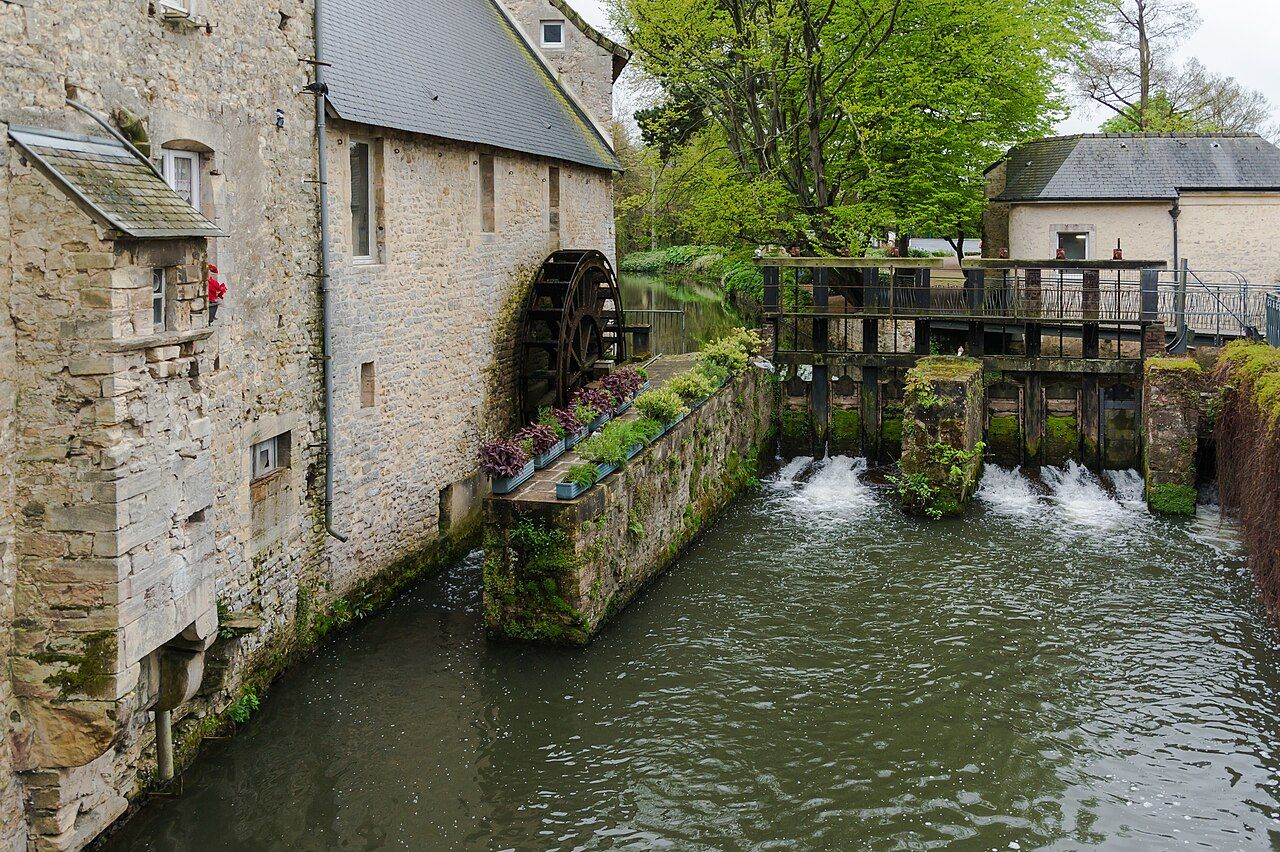

Where does a walk through old Bayeux begin? The Aure runs through the middle of Bayeux. That is not a distant boundary or a footnote. It is a river running through town, giving this walk another line to follow.
What does the Aure add to the old streets? It gives the town a second way to read itself. Streets cross the town; water moves through its middle. I like that distinction. It keeps the walk from becoming a list of façades.
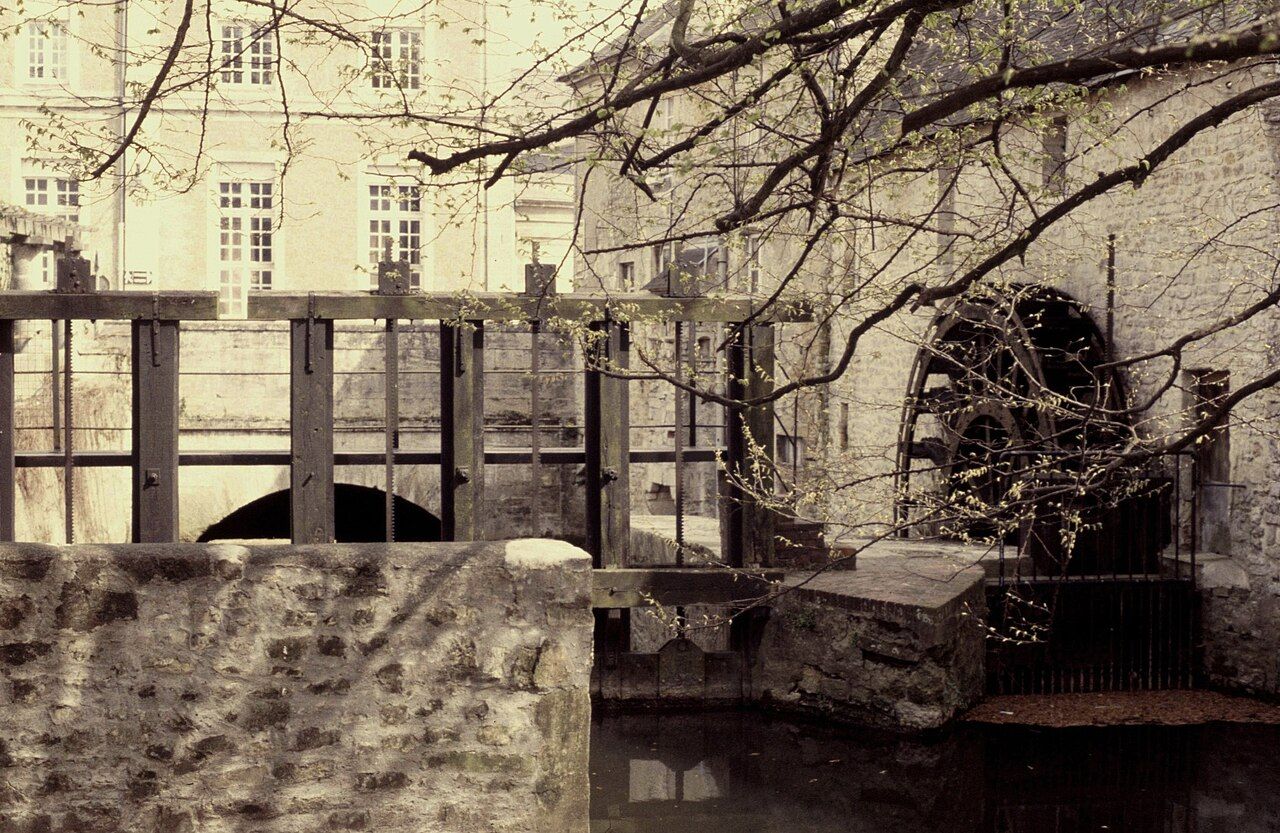
What once happened beside the river? Water mills stood along the Aure in town. Some wheels still turn, letting water do more than mark a route. A wheel makes the river's work plain: water passes, and the wheel moves.
Should the wheels become the whole story? No; the streets deserve their own close look. Rue Saint-Jean and rue Saint-Martin form the main pedestrian street across town. Their joined names make a clear line through the old centre.
What is worth noticing along that line? Several houses in the old centre are timber-framed. Some date from the 15th century. The frame is not a decorative afterthought; it is the structure made legible.
Does every old house need a grand explanation? No. Timber-framed is already a useful answer, and the age adds another. For a separate Bayeux thread, follow the lace makers' house.
What tree belongs in this walk? A plane tree still stands on Place de la Liberté. It was planted in 1797 as a tree of liberty. The name carries its purpose without needing a longer label.
Why stop on the square for a tree? Because the date and name make a precise pairing. A plane tree, a place called Liberty, and a planting in 1797. That is a compact piece of civic history.

When do the markets meet these streets? Markets are held Wednesday mornings in rue Saint-Jean. On Saturday mornings, they are held on Place Saint-Patrice. Those details give the street names a present-tense use.
Is this a long walk across town? On foot, the old centre takes about fifteen minutes to cross, keeping river, streets, houses and tree within one walk. That makes it easy to keep the river, streets, houses and tree in one mental map.
What should the walk avoid? Rushing to turn every detail into a landmark. The pleasure is in the mechanisms: water turning wheels, timber forming houses, and a planted tree carrying its name.
Can the old centre be reduced to one route? Not quite; the river and pedestrian street offer different lines. Keep both in mind, then let the details interrupt the neat plan.
- The old centre is in town and crosses on foot in about fifteen minutes.
- Rue Saint-Jean and rue Saint-Martin form the main pedestrian street.
- Markets: Wednesday mornings in rue Saint-Jean; Saturday mornings on Place Saint-Patrice.
For another Bayeux story, continue with liberation and the war cemetery.
Pull the next thread: June 1944 in Bayeux: a town barely damaged
- How far from the cathedral in town
- Where exactly old centre
Bayeux lace, a bobbin at a time • June 1944 in Bayeux: a town barely damaged