Scene V · Bayeux itself
June 1944 in Bayeux: a town barely damaged
Bayeux was freed the day after the landings. De Gaulle spoke here, while a cemetery, a Latin inscription and a reporters’ memorial hold different parts of the story.

British troops entered Bayeux on 7 June 1944, the day after the landings. What did that mean for the town? Bayeux became the first town in mainland France to be freed, and was barely damaged.
Why begin with the date? It fixes the sequence plainly. The landings came first; the troops entered Bayeux the following day. In a story of liberation, that order matters.
What does “barely damaged” tell us? It describes the town’s condition, not every experience within it. I like the plainness of the fact: survival needs no extra decoration.
What does the town’s limited damage change? It makes the sequence stark: entry, liberation, then public address. That does not make the event small. It makes the movement from military arrival to political speech visible.
Pull the next thread: Bayeux lace, a bobbin at a time
When did General de Gaulle speak here? He addressed the people of Bayeux on 14 June 1944. That visit came after British troops entered the town.
Did he return? Yes. De Gaulle came back on 16 June 1946 to give a speech on how France should be governed. The second visit had a different purpose.
Why keep both dates together? They show two public moments. One was an address to Bayeux’s people; the other concerned the government of France.
Where does the cemetery fit into this story? Bayeux War Cemetery is the largest Commonwealth cemetery of the Second World War in France. It holds more than 4,000 graves.
Where is it? The cemetery is on the south-west side, by the ring road. That practical position sits alongside a much larger measure: more than 4,000 graves.
Who cares for the cemetery? The Commonwealth War Graves Commission does. The name gives the work a formal shape; the graves make its scale difficult to miss.
What does the memorial opposite say? Its Latin line reads: “we, once conquered by William, have freed the Conqueror's homeland.” The sentence compresses a long historical reversal.
Why is that line here? It joins conquest and liberation in one statement. I find its directness striking; the wording does not soften either half of the claim.
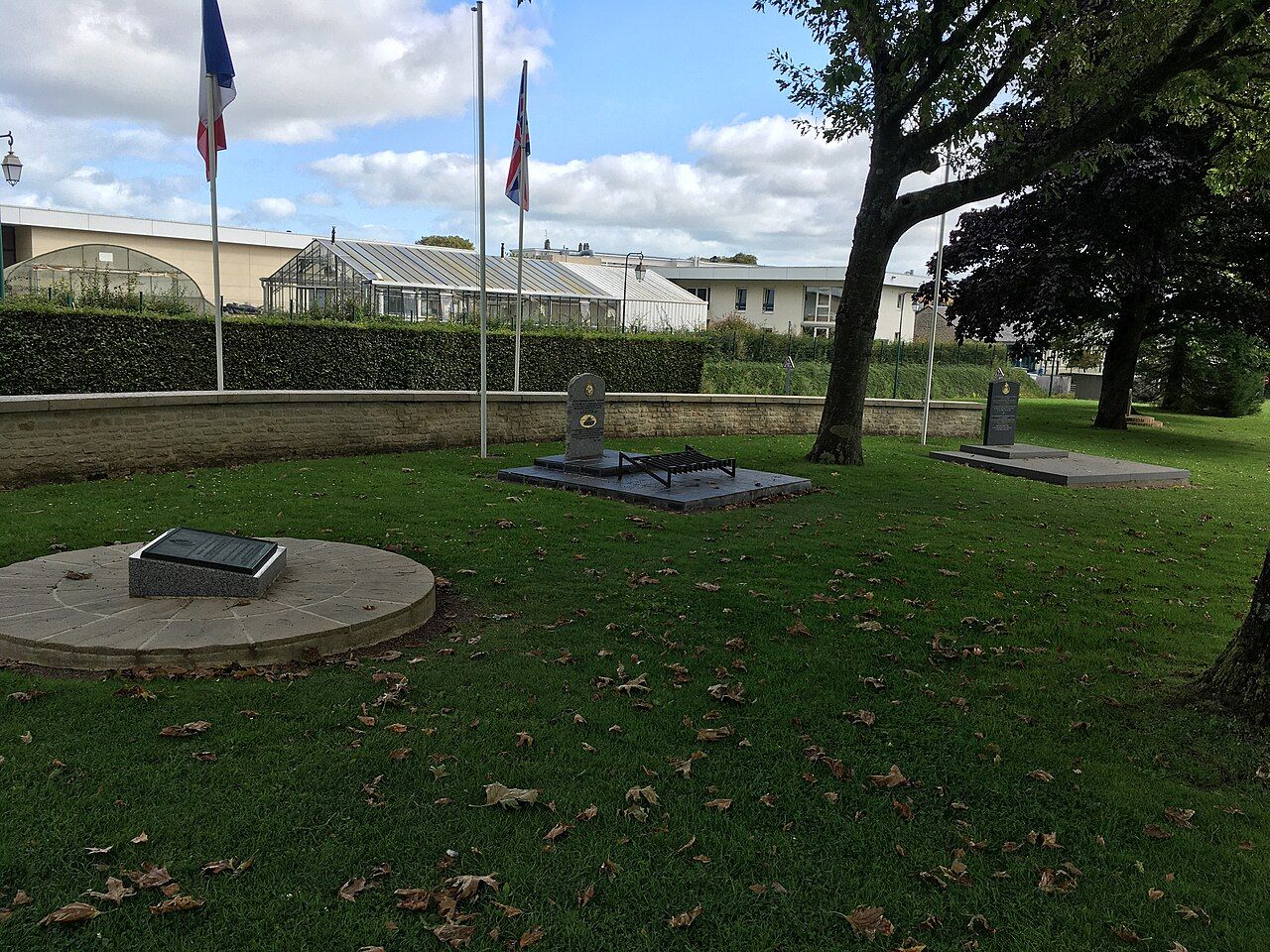
What remembers reporters killed at work? A memorial walk in Bayeux lists their names. The list reaches back to 1944, making the memorial’s subject clear without explaining away the danger.
Does the town also recognise war correspondents? Since 1994, Bayeux has given a yearly prize to war correspondents. The memorial walk and prize mark different forms of remembrance.
What else stands near the cemetery? The Memorial Museum of the Battle of Normandy is nearby. That proximity keeps the cemetery within a wider landscape of wartime memory.
How should these places be read together? The town’s survival, the cemetery’s graves, and the memorials each answer differently. None needs to stand in for the others.
Where does the story lead next? Bayeux’s June belongs to a wider coastal account. Follow the floating harbour for another part of that story.
- How far from the cathedral in town
- Where exactly ring road, south-west side
Bayeux on foot, from market morning to river evening • Balleroy: the château at the end of the street