Scene VII · The Bessin bocage
Balleroy: the château at the end of the street
A straight village street, an early Mansart château and a museum of hot-air balloons make Balleroy a story about a design that kept travelling.
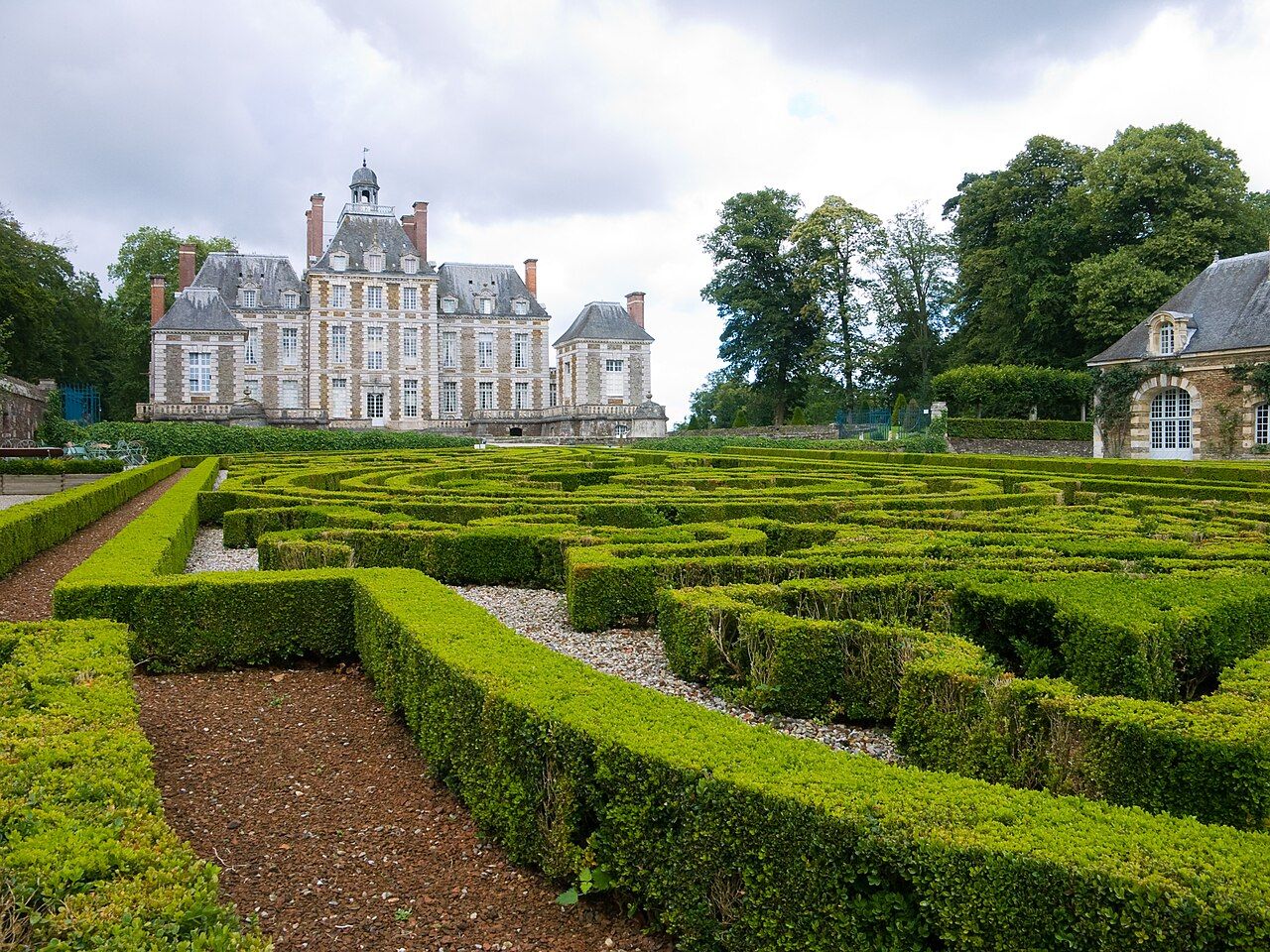

What does Balleroy’s main street tell us? It runs straight up to the château gates. The village and château were planned as one design. The street is not simply a route towards the building. It belongs to the same idea. That straight axis makes the village part of the château’s design.
Why begin with the street, rather than the château? Because the line makes their relationship plain. The village does not just sit beside the grand address. Its main street points directly towards it. That is a satisfying piece of planning.
What was the building’s place in the plan? The Château de Balleroy was built from 1631 to 1636. It was built for Jean de Choisy. The dates give the design a firm beginning and end. The street gives it a visible connection.
Who designed the château? It is an early work of the architect François Mansart. That makes Balleroy useful for seeing an early point in his work. The village plan adds another interest, without needing to outshine the building.
Is the straight approach just a convenient way to arrive? It does that, certainly. But a planned street running up to the gates also makes the approach part of the design. The village and château read together, not as separate subjects.
What should the eye follow? Start with the street, then follow its direction towards the gates. There is a simple pleasure in a plan that declares itself so clearly. No maze of turns is required to understand the connection.
Does the story stop with Mansart and the village plan? Not quite. The château acquired a much later association with hot-air balloons. That change of subject is hard to resist. Architecture, it turns out, can make room for unlikely neighbours.
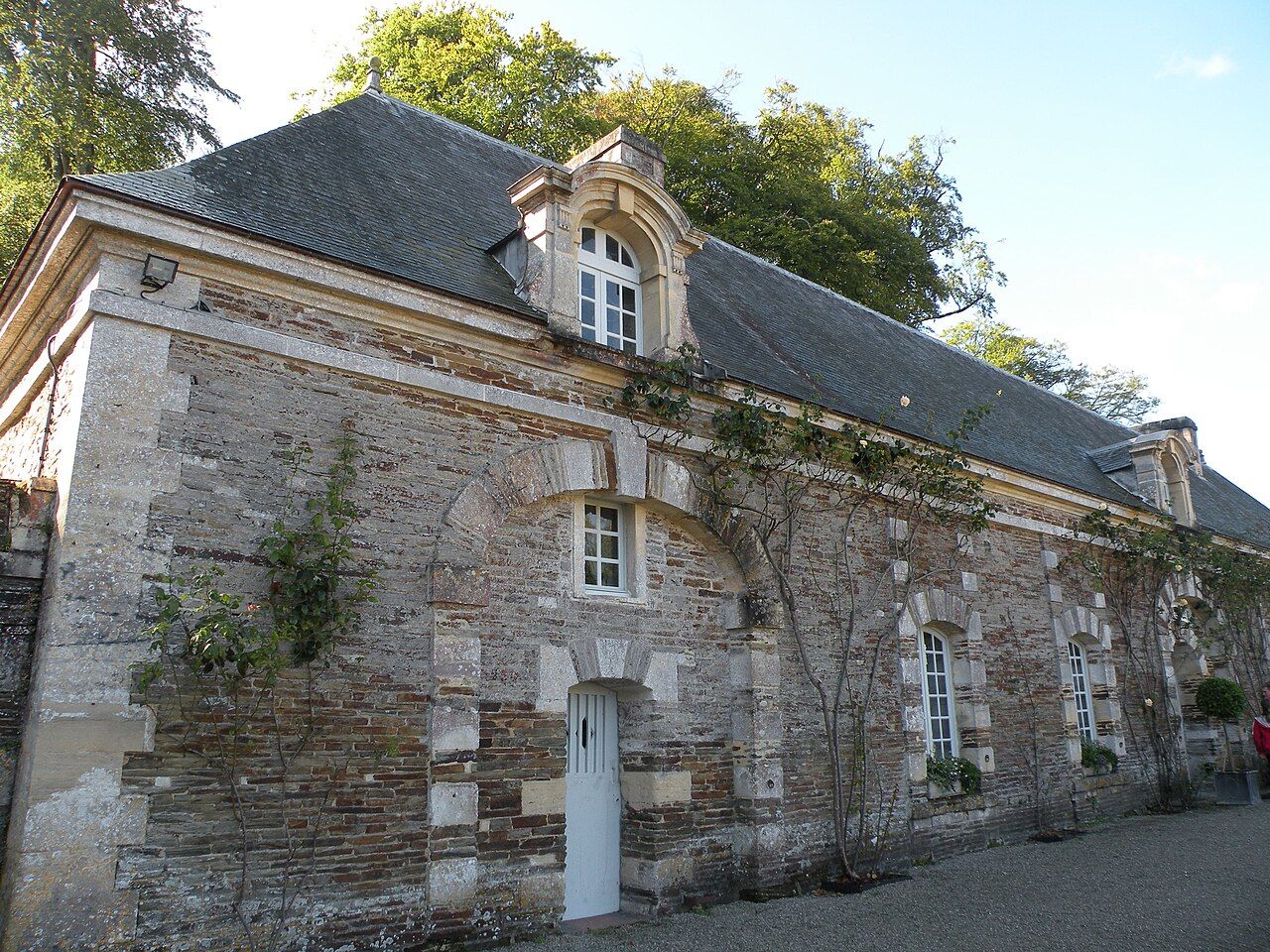

Who brought balloons into the story? The American publisher Malcolm Forbes bought the château in 1970. He set up a museum of hot-air balloons in the stables. The old building gained a new purpose, without losing its earlier one.
Why put a balloon museum in the stables? The facts give the location, not a longer explanation. Still, the pairing has an appealing logic. A château is built around a plan; a balloon depends on a very different kind of lift.
Did the balloons remain a museum subject? Balloon gatherings have been held at Balleroy since then. That is the useful hinge in the story: a purchase, a museum in the stables, then gatherings connected with the place.
How should these details sit together? Keep the straight street and the château in view. Then add the balloon museum and its gatherings. Balleroy’s interest lies in those layers, not in choosing only one.
How far is Balleroy from Bayeux? It is about 15 km south-west of Bayeux. That gives the village a clear place in the surrounding map. For a different line through the landscape, continue with the beech forest next door.
And what other building story belongs nearby?
Pull the next thread: Mondaye Abbey, still at prayer
- How far from the cathedral about 15 km south-west
- Where exactly Balleroy
Beeches and Beetles in the Forest of Cerisy • Mondaye Abbey, still at prayer