Scene VIII · The Bessin bocage
Beeches and Beetles in the Forest of Cerisy
A day runs from beech woods to abbey church, with straight forest roads, a copper-shining ground beetle and a choir lit by three levels of windows.
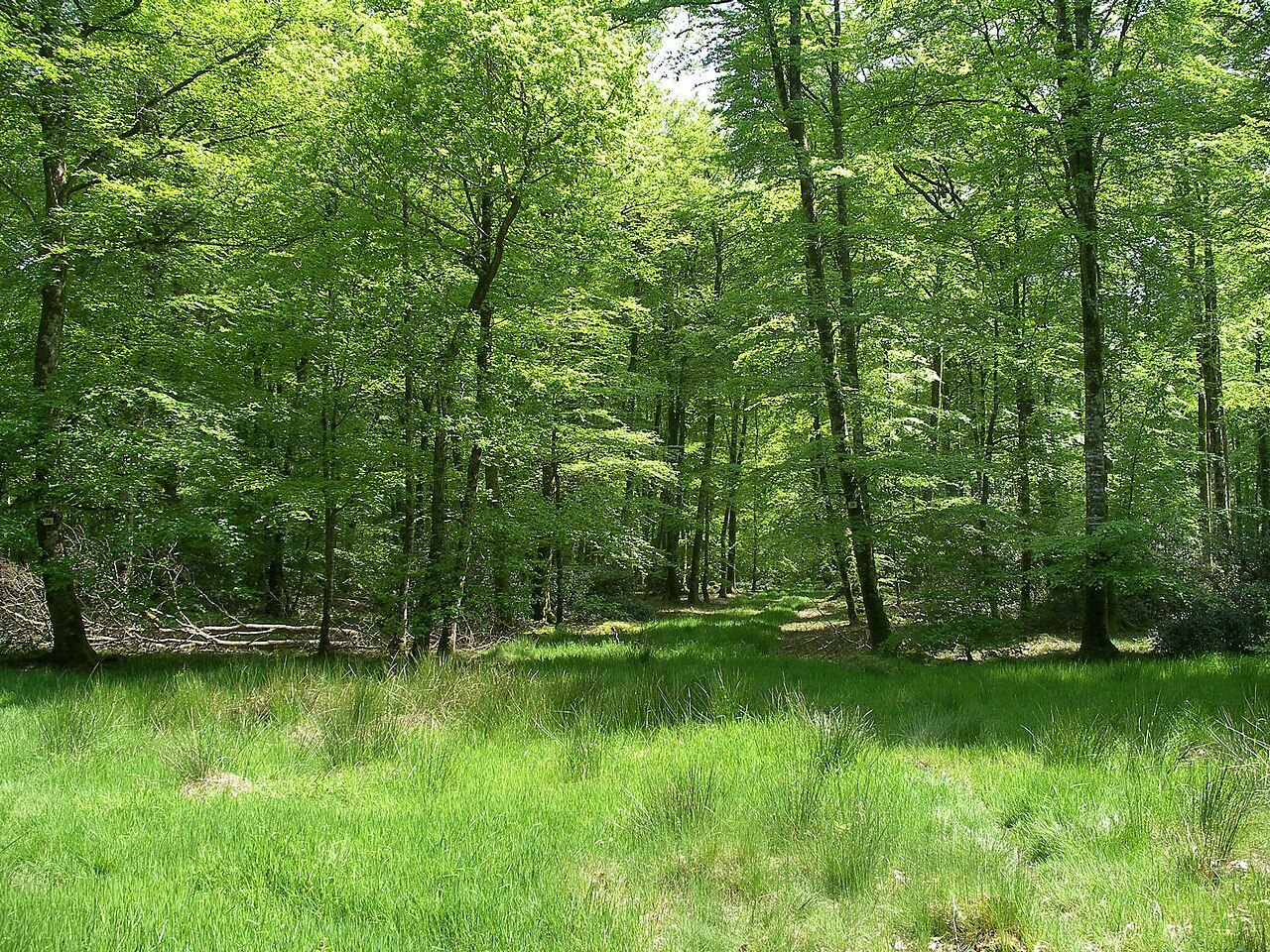

The Forest of Cerisy covers about two thousand one hundred hectares, mostly beech. It straddles the Calvados and Manche departments, with straight roads and paths crossing from crossroads.
Where does the morning begin? With the forest’s peculiar geometry, rather than a grand entrance. The roads and paths run in straight lines from crossroads. I like that plain arrangement; it gives the eye something definite to follow.
What is there to understand in those lines? A crossroads sets out several directions at once. The forest’s paths carry those lines on through the beech. No invented maze is needed; the real pattern does enough work.
How much forest is this? About two thousand one hundred hectares, mostly beech. That is a useful scale to hold in mind. The number is large, but the useful detail is the mix: a whole forest, with one tree making up most of it.
What happens to the beech in autumn? Its leaves turn copper and gold. The season gives the canopy a different colour, though the timing is not a clockwork promise. Copper turns up again below, in a rather smaller form.
What is the small copper detail? The Cerisy carabus, a local ground beetle protected here. Its shine is coppery, a good reason to keep the name close. The forest is a nature reserve protecting it.
Is the beetle the whole point of the reserve? It is the named reason in these facts. That is enough to make the forest feel more particular. Beech above, a local ground beetle below: a tidy pairing, if nature can be accused of tidiness.
What belongs to midday? The change of scale, from forest pattern to church detail. At the forest’s edge stands the abbey of Cerisy-la-Forêt. It was founded in ten thirty-two, and its church is Romanesque.
Why leave the straight lines for an abbey? Because the church offers another kind of structure. Its choir is tall and light, with three levels of windows. I would look at the levels before trying to sum up the building.
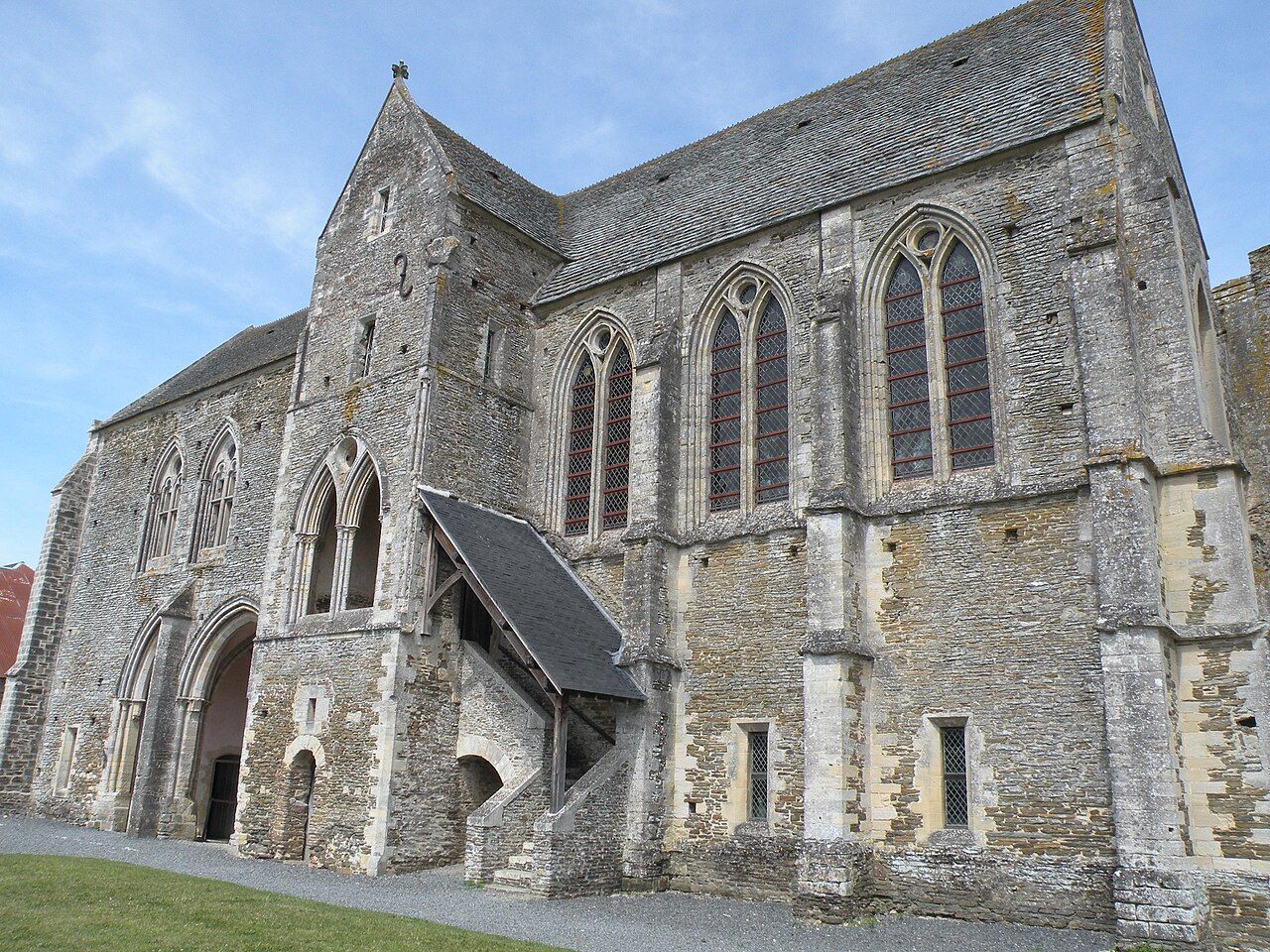

What does “three levels” add? It makes the windows part of the choir’s shape, not merely openings. Tall, light, and layered are useful words here. They describe the church without asking it to perform a grand speech.
Can the forest and abbey sit in one day? Yes: the abbey stands at the forest’s edge. That relationship is the simple hinge between them. One visit can move from straight paths to a choir shaped by windows.
What belongs to late afternoon? A second look at the forest, with its roads and paths still running straight from crossroads. I favour the detail that survives a change of attention. The carabus keeps its copper shine in the story, even when the beech leaves claim the colour.
Does autumn make the whole forest copper and gold? The leaves turn those colours in autumn. That is the clear seasonal fact; the exact moment is not. I would leave the calendar to the leaves, rather than invent a date for them.
What should remain after the day? The contrast: mostly beech, a protected local ground beetle, and a Romanesque church at the edge. For another abbey story, try an abbey where canons still sing.
And what other landscape fits this kind of looking? The bocage lanes make a natural next story.
- Where: Cerisy-la-Forêt.
- From Bayeux: about twenty kilometres south-west.
- Forest: about two thousand one hundred hectares, mostly beech.
- Edge detail: the abbey church has a tall, light choir with three levels of windows.
Pull the next thread: Hedges, banks and sunken lanes
- How far from the cathedral about 20 km south-west
- Where exactly Cerisy-la-Forêt
Mondaye Abbey, still at prayer • Hedges, banks and sunken lanes