Scene X · The Bessin bocage
Hedges, banks and sunken lanes
Morning, midday and late afternoon offer three ways to read the Bessin bocage: its field boundaries, its working landscape and its slow fighting in 1944.
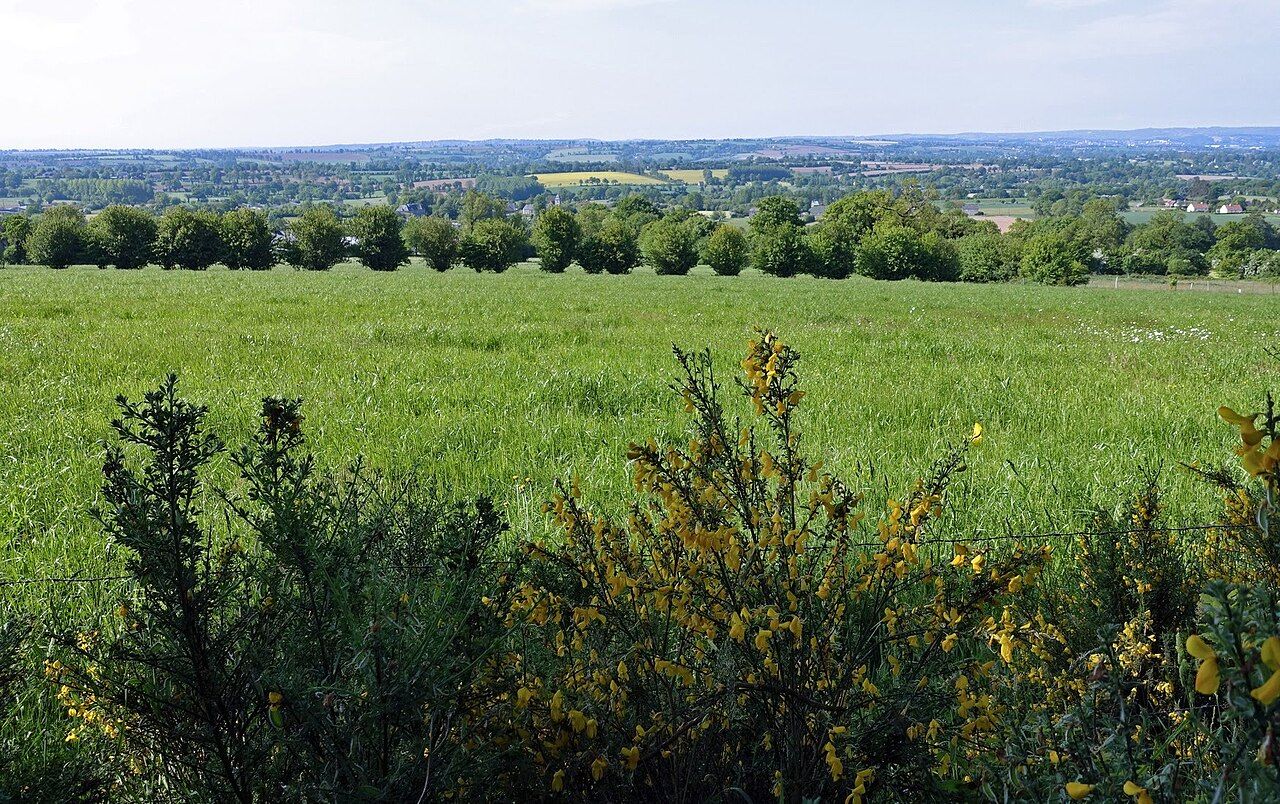

What meets the eye in the morning? Small fields sit boxed by hedges, their roots planted on earth banks. A lane runs sunk between banks, below the fields around it. The landscape makes its boundaries unusually plain.
What does bocage mean here? It names a pattern, not a single feature. Fields, hedges and banks belong together. The banks give the hedges their raised footing; the hedges draw the edges of each small field. Read them as one piece of country.
Why put a hedge on an earth bank? The banks and hedges hold back wind and rain. They also keep cattle in. That is the useful mechanism: a boundary that shelters the field and contains its animals. Bocage is not just green edging for a view.
Why does the lane sit so low? Many lanes run between two banks, below the level of the fields. That difference in height is the first clue to reading the place. From the lane, the field edge is not simply beside the road; it rises above it.
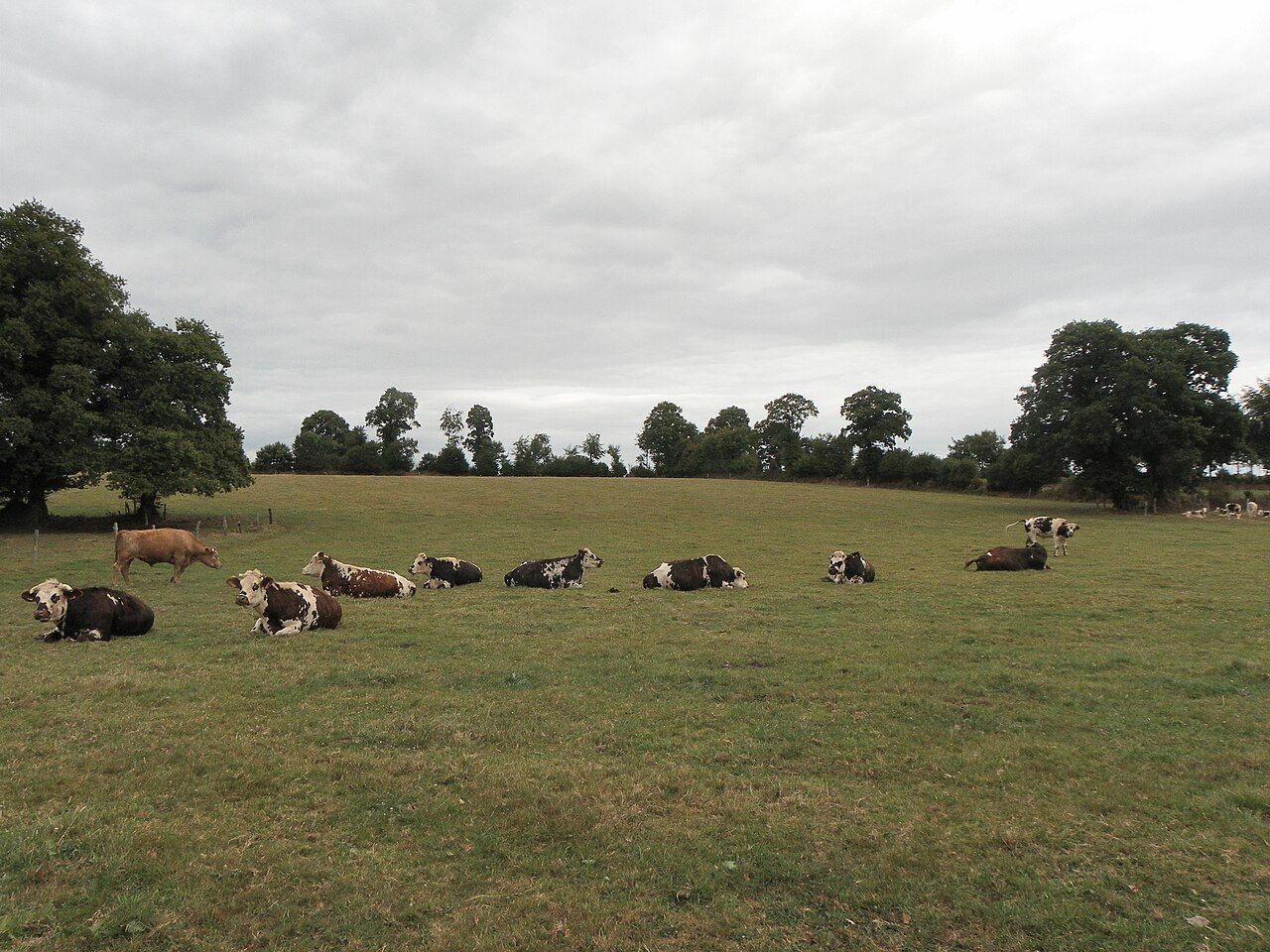
What might be moving among those field edges? Normande cows are brown and white, with dark patches around their eyes. The hedges and banks make sense as working boundaries when cattle are part of the picture. I like this answer better than treating them as decoration.
What belongs to the meadows as well? Many farms grow tall, old cider apple trees there. The trees add another layer to the farm landscape, without changing its basic pattern of fields and boundaries. For the apple story, follow apples into cider and brandy.
What do the farmhouses tell us at midday? In the Bessin, they are built of local stone. That is a plain material fact, and a good counterweight to all the green. The landscape is made from boundaries, fields and buildings, not hedges alone.
What changes when the hour turns to the fighting? In 1944, hedges and banks made each field a small fortress. The fighting there was slow. The field pattern matters because every boundary divided the ground into another enclosed space.

Why call each field a fortress? The phrase describes what the banks and hedges did to the shape of the ground. A small field was not an open sweep of land. Its enclosing edges helped make the fighting slow.
How should the lanes be read alongside that history? Their sunken course belongs to the same close-grained landscape. Banks rise on both sides; fields lie higher. Bocage is easiest to understand as a set of linked shapes, not as one uninterrupted hedge.
What might late afternoon reveal about the pattern? Many hedges have been cleared since the 1950s to make bigger fields. That change makes the old arrangement worth noticing: small fields, banked boundaries and lanes below their level. It also explains why not every field edge tells the same story.
Where does that leave a visitor looking across the Bessin? Start with the boundaries that remain visible. Ask what sits above the lane, and what holds the cattle in. The landscape answers through its construction, rather than through a grand label.
Pull the next thread: Balleroy: the château at the end of the street
- Where: the Bessin countryside.
- From Bayeux: the countryside lies all around.
- Look for: small fields, hedges planted on earth banks, and sunken lanes.
And where does one field end, and the next story begin?
- How far from the cathedral all around
- Where exactly the Bessin countryside
Port-en-Bessin: scallops, stone and cliff paths • The Guns of Longues-sur-Mer