Scene XV · Butter and apples
Cider, pommeau and calvados: the orchard in a glass
The Bessin’s orchards turn bitter and sweet cider apples into cider, pommeau and calvados, with a small glass midway through a long meal.
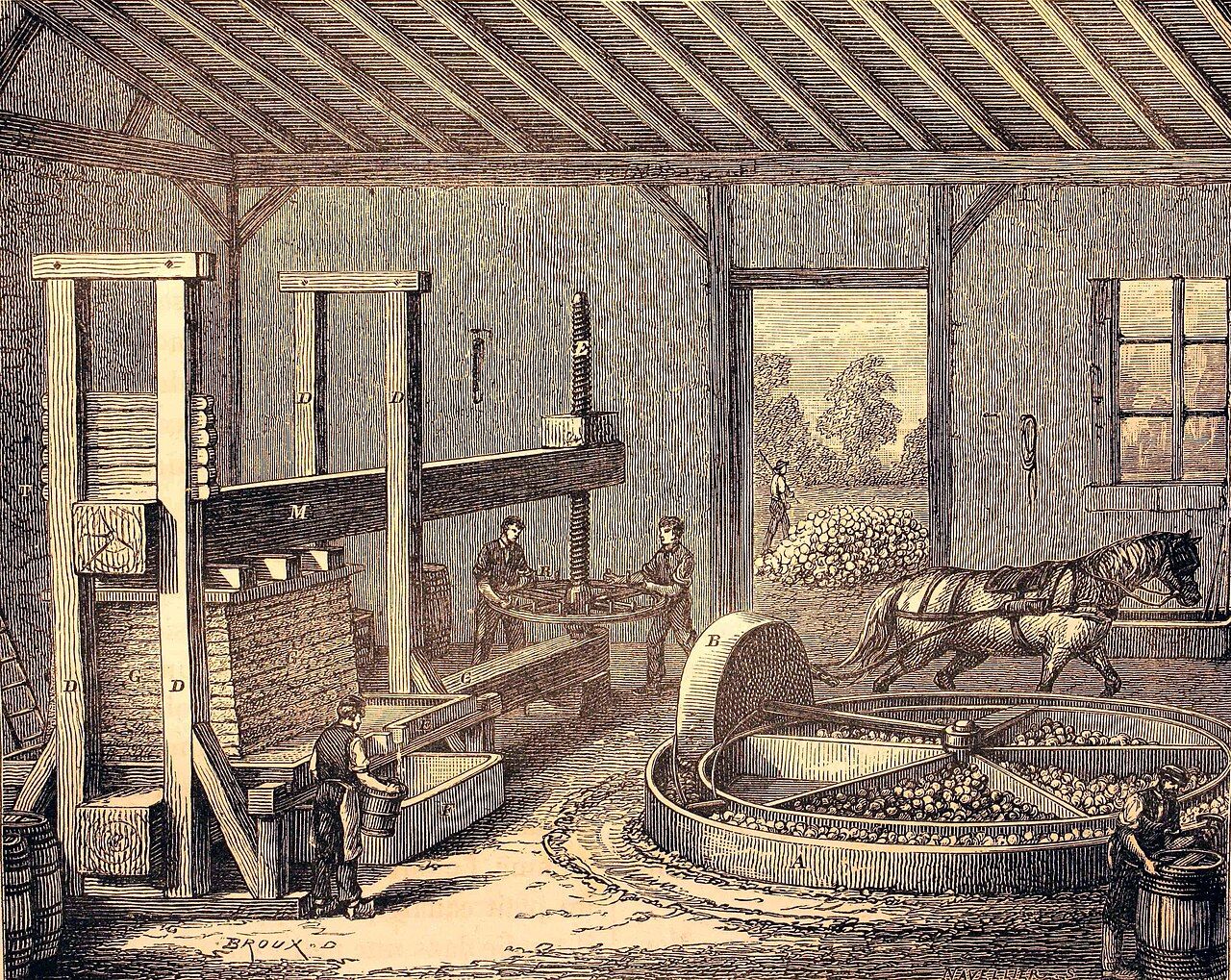

What is the glass doing halfway through a long meal? The trou normand is a small glass of calvados, drunk in the middle. Its place in the meal is wonderfully specific: not the beginning, not the finish, but the middle.
What should morning begin with? With the apples, and a useful distinction. Normandy cider uses bitter and sweet cider apples, not eating apples. That is the first small correction to make before calling every apple drink cider.
What becomes of those cider apples on farms? Farm cider can be dry, called brut, or sweet, called doux. I like that the names give the choice plainly. There is no need to pretend a glass is doing something mysterious.
Where can farm cider be found in the Bessin? Many farms sell their own cider at the farm gate. The useful detail is the word own: this is farm cider sold where it is made. Orchards sit all over the region, rather than in one neat pocket.
What changes by midday, when the meal takes its time? The cider has already introduced the apples; now calvados takes its place. The trou normand is a small glass, not a second course. Its job is simply to appear midway through a long meal.
Why is calvados a different drink from cider? It is apple brandy, distilled from cider and aged in oak casks. That is the mechanism in a short line: cider, distillation, then oak. I prefer the explanation to treating the name as decoration.
Does every calvados follow the same distilling method? The Pays d’Auge version is distilled twice. Calvados also has a protected name. Those two facts belong together: one names a particular method, the other protects the drink’s name.
What sits between juice and brandy? Pommeau blends apple juice with calvados, then ages in oak. Its ingredients make it a useful middle point in this orchard family. It is not cider, and it is not simply calvados in another glass.
What else might an orchard turn into? Poiré is made from pears, with Domfront the best-known area. That is a different fruit, and worth keeping separate from cider’s apples. The names are doing practical work, not merely filling a drinks list.
What belongs in the late afternoon conversation? The oak-aged drinks are an easy place to linger: pommeau blends juice and calvados, while calvados begins as distilled cider. I like following the process backwards. Each glass points towards a different stage of the fruit.
How should the drinks sit beside the rest of a meal? The small mid-meal glass is my favourite part. I would skip flattening every orchard drink into one category. A meal has other local subjects too: the four named cheeses belong in that conversation.
- Normandy cider uses bitter and sweet cider apples, not eating apples.
- Farm cider can be brut or doux.
- Pommeau blends apple juice and calvados, then ages in oak.
- Calvados is distilled from cider and aged in oak casks.
- Many Bessin farms sell their own cider at the farm gate.
What else belongs beside the orchard story?
Pull the next thread: Isigny: Butter, Cream and a Protected Name
- How far from the cathedral all around
- Where exactly orchards all over the region
Isigny: Butter, Cream and a Protected Name • Four named cheeses of Normandy: shape, rind and taste