Scene XIX · A day's drive
Caen: two abbeys, a castle and the memory of 1944
William and Matilda’s foundations give Caen an intimate history of patronage and burial. The castle and a museum of war and peace widen the day’s view.
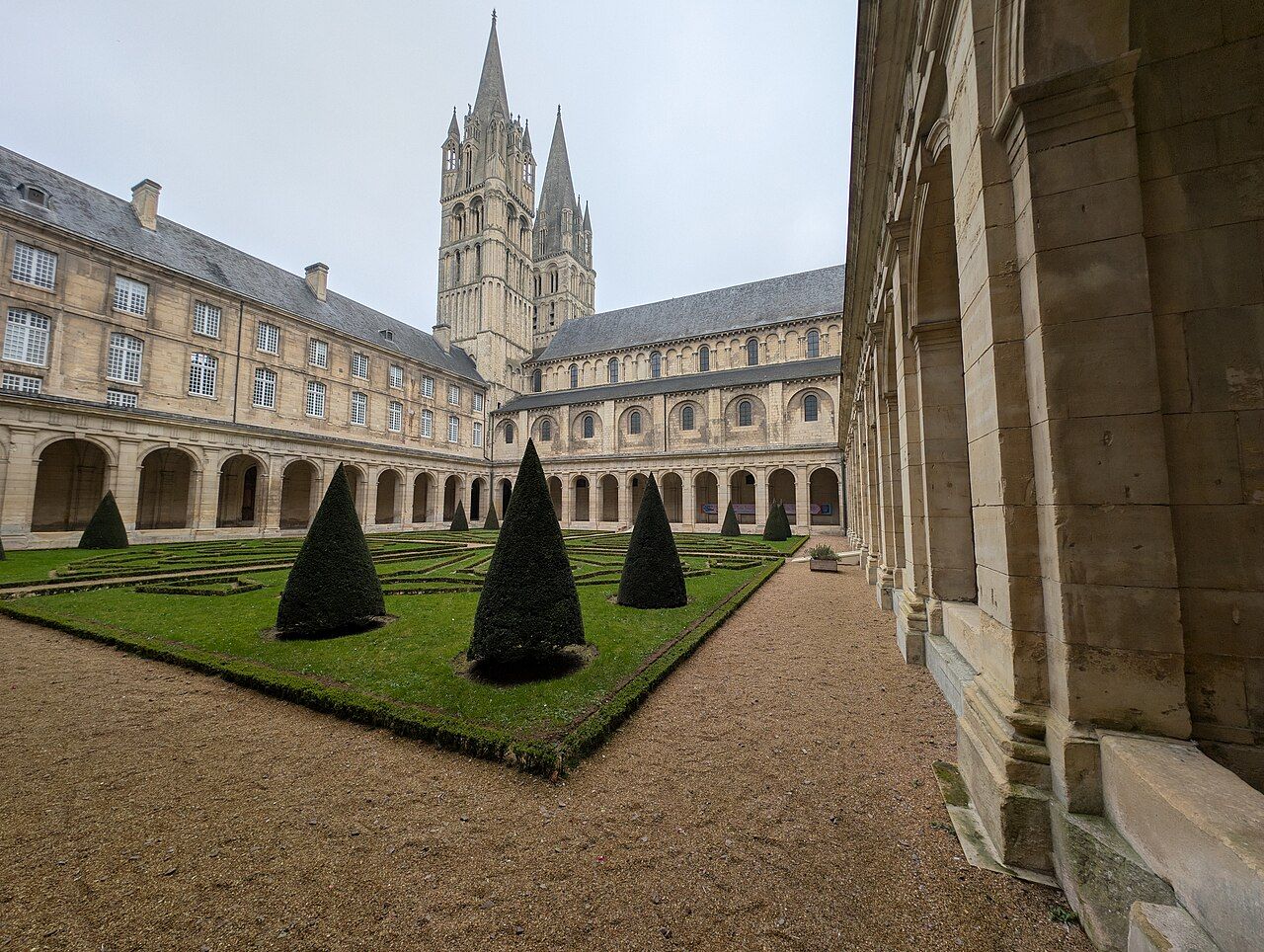

Caen lies about thirty kilometres east of Bayeux. What makes a day here cohere? Three old foundations, then a museum shaped by much later destruction. The order matters less than the joins between them. Caen makes those joins unusually easy to notice.
Why begin with the abbeys? William the Conqueror founded the Abbaye aux Hommes in the 1060s. Its name means the men's abbey. His wife Matilda founded the Abbaye aux Dames, the women's abbey. Their names make the pair sound almost like a matched set. The history is less tidy: each foundation has its own church and burial place.
What remains of William's connection to the men's abbey? He is buried in the abbey church of Saint-Étienne. That is a useful distinction: the abbey is the foundation, while Saint-Étienne is its church. The tomb makes the connection personal, rather than simply architectural. I would give this detail time, instead of treating the abbey as scenery.
Where does Matilda's story meet the building? She is buried in the church of the Trinity at the Abbaye aux Dames. The paired names invite comparison, but the burial places do not merge. William belongs here, Matilda there. That little piece of structure is the day’s clearest guide to how their foundations relate.
Why found two abbeys? The facts give us a direct answer about who founded them, not a full account of why. It is worth resisting the urge to fill that gap with a grand theory. The names tell us which foundation was for men and which for women. The churches hold the two burials. That is already a strong, human frame.
What should a visitor notice about the word “founded”? It points to an act of making, not just a building. A foundation gives the abbey its place in the story; a church gives that story a particular address. I like this distinction because it stops the day becoming a checklist of impressive nouns. The mechanism is the point.
What sits alongside the abbeys in Caen’s story? William built the castle of Caen around 1060. Its walls enclose a large open area, with museums of art and of Normandy. The castle walls hold museums inside a large open area. It is the kind of fact that changes how the place reads: enclosure, open ground, then collections.
The castle walls hold museums inside a large open area.
Why is an open area inside castle walls worth attention? Because the description gives two scales at once. There is a boundary made by walls, and there is room within it. The museums sit inside that bounded space, not outside the castle story. I would skip imagining the castle as one solid object. Its walls describe a space as much as a structure.
How does the castle connect to the two abbeys? William is the name shared across the foundations and the castle. He founded the Abbaye aux Hommes and built the castle around 1060. Matilda’s foundation completes the pair, but does not make every place interchangeable. I prefer this modest connection to a forced grand narrative: different acts, held in one city.
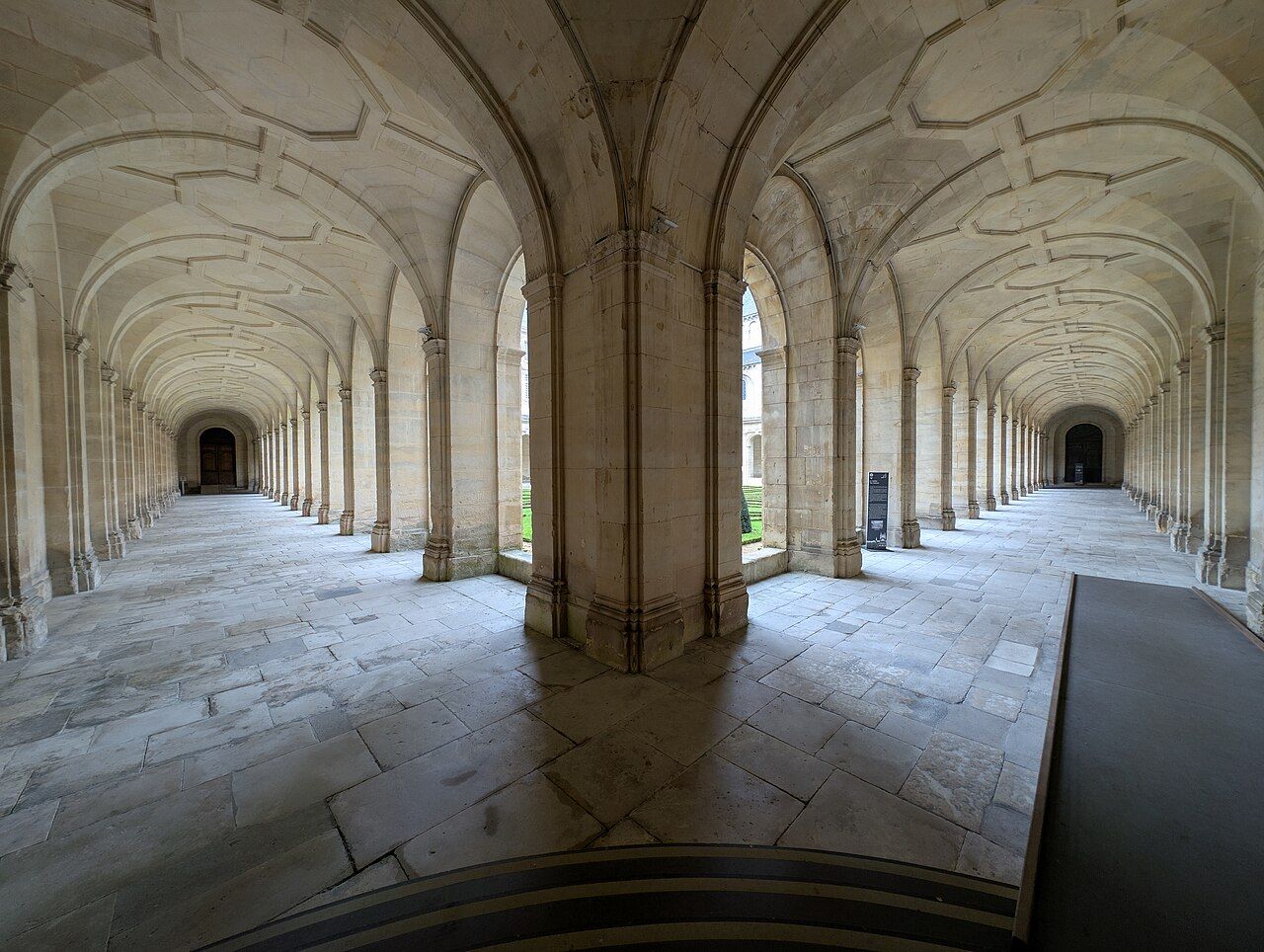

What can Caen stone add to the picture? It is a pale limestone, shipped to England to build cathedrals and the Tower of London. That sentence gives the stone a journey beyond Caen. It also gives the material a job: not simply to be looked at, but to become part of buildings elsewhere. The useful detail is the movement.
Why mention a building material on a day of abbeys and a castle? Because stone makes history physical without requiring a new monument. Caen stone travelled to England for cathedrals and the Tower of London. The detail widens the map, then brings attention back to the material itself. Pale limestone is not an abstract label once its destination is clear.
What changes the mood of the day? Much of Caen was destroyed in the fighting of summer 1944. That fact interrupts any simple march from medieval foundations to present-day city. It should not be treated as a footnote after the abbeys. The scale of that destruction belongs in the same account, even though it belongs to another time.
What addresses that later history? The Mémorial de Caen is a museum of the war and of peace. It opened in 1988. The pairing in its description matters: war and peace, rather than war alone. I would leave room for this change of subject. The museum alters the shape of the day instead of simply extending the medieval story.
How should the pieces sit together? Begin with the two foundations, and keep their churches distinct. Add William’s castle, whose walls enclose museums and open ground. Then let the story turn towards destruction and the museum opened in 1988. This is not one seamless history. Its value comes from seeing the joins without pretending they erase the breaks.
Which detail stays with me? The two burials, placed in different churches, make the paired abbeys specific. The castle supplies another kind of enclosure, with museums inside its walls. Caen stone carries the story beyond the city, while the events of 1944 bring it sharply back. I would skip the urge to make one monument explain everything.
Is there room for another story after Caen? Yes: follow the painters' harbour for a different Normandy subject. Caen is a day built from contrasts: foundation and burial, walls and open ground, war and peace. The facts do not make those contrasts disappear. They make them easier to see.
Pull the next thread: When the marshes turn white
- Caen is about thirty kilometres east of Bayeux.
- The train journey from Bayeux takes about twenty minutes.
- How far from the cathedral about 30 km east
- Where exactly Caen
Honfleur: the harbour and its wooden church • When the marshes turn white