Scene XX · A day's drive
Honfleur: the harbour and its wooden church
From the slate-fronted Vieux Bassin to the church built by shipwrights, Honfleur keeps its harbour and its making in view.
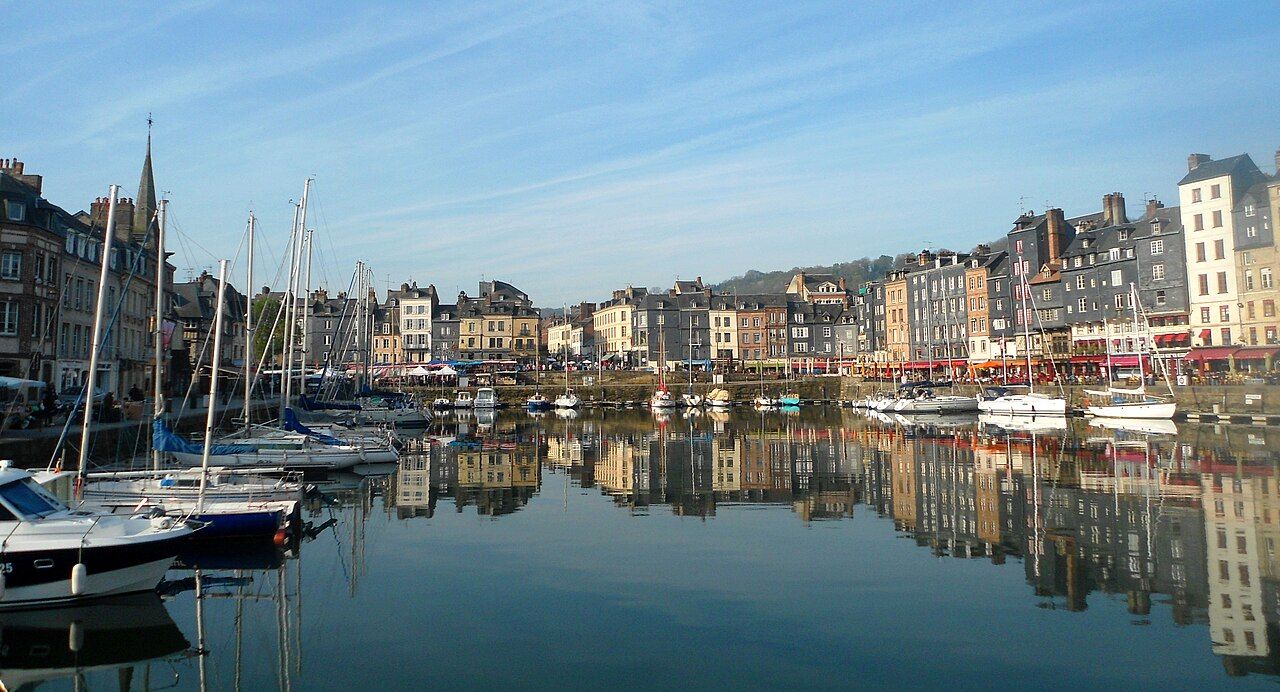

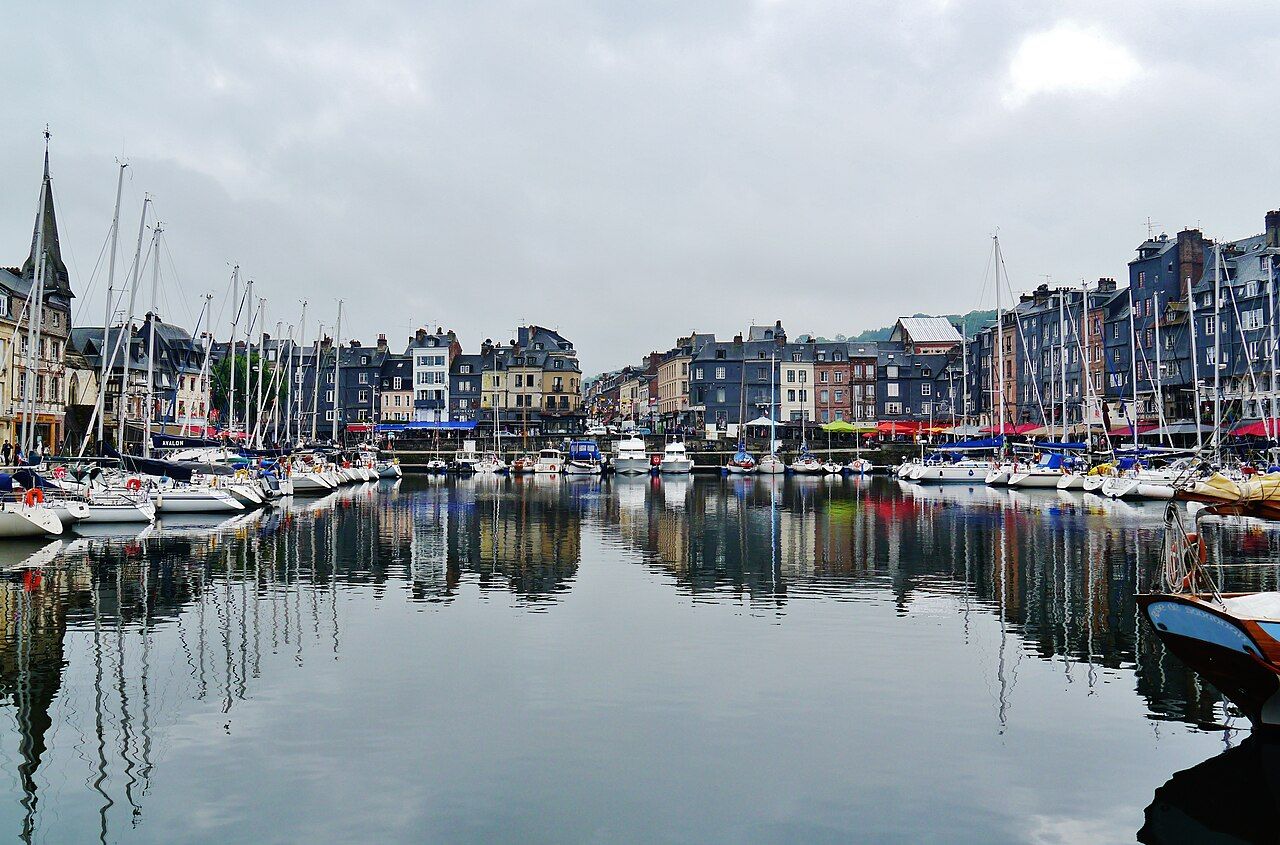
What opens the morning? Tall, narrow houses line the old harbour. Their slate fronts face the Vieux Bassin. Honfleur lies on the Seine estuary’s south bank. The scene starts with houses, water and a name.
What does the name identify? The Vieux Bassin is Honfleur’s old harbour. Its tall, narrow houses make a clear line beside it. I like that useful simplicity; the basin needs no elaborate introduction.
What should the eye keep together? The slate fronts and the harbour. Look at the repeated narrow shapes, rather than hunting for one grand explanation. A harbour can make its point through arrangement.
Where is this arrangement? Honfleur lies about 90 km east of Bayeux, on the Seine estuary’s south bank. That gives the morning a straightforward map. The estuary belongs to the town’s setting, not merely its name.
What changes at midday? The question moves from harbour houses to Sainte-Catherine’s church. It is the largest wooden church in France. That distinction is plain enough to carry the story.
Who built it? Shipwrights built the church after the Hundred Years’ War. The connection is specific: people who worked with ships made this wooden church. I prefer that solid detail to any vague talk of atmosphere.
What detail makes the church harder to file away? Its bell tower stands apart from the church. It is across the square, not beside the building. The tower’s position does its own quiet explaining.
Does the separation need an invented theory? No. The facts give us the builders, the material and the tower’s position. That is already a good deal to notice before lunch.

Why stay with the church through midday? Its scale and construction deserve a pause. The largest wooden church in France was built by shipwrights after the Hundred Years’ War. A neat answer, with no extra legend required.
Who enters the story beyond the builders? Eugène Boudin, a painter, was born in Honfleur in 1824. The town’s names can follow its buildings. First the harbour, then a person born here.
And who else was born in Honfleur? Erik Satie, the composer, in 1866. Keep the labels clear: Boudin was a painter, Satie a composer. This is a short list, not a licence to invent a connection.
What suits late afternoon? Let the view widen back towards the estuary. The Vieux Bassin gives the eye its close arrangement; the estuary gives the town its wider setting. Both belong in the same account.
What crosses the Seine estuary? The Pont de Normandie, which opened in 1995. Its scale differs from the old harbour and the wooden church. The bridge adds another clear fact to Honfleur’s estuary story.
Which detail stays with me? The bell tower standing across the square. It is an excellent small puzzle, and the facts leave it pleasantly intact. For another town’s story, continue with William's city.
Pull the next thread: Mont-Saint-Michel, without the crush
- Where: Honfleur.
- From Bayeux: about 90 km east.
- How far from the cathedral about 90 km east
- Where exactly Honfleur
When the marshes turn white • Mont-Saint-Michel, without the crush