Scene II · Bayeux itself
Notre-Dame de Bayeux, from crypt to lantern
A cathedral built in layers: Romanesque arches and a painted crypt below, Gothic rebuilding above, and a nineteenth-century tower at the centre.
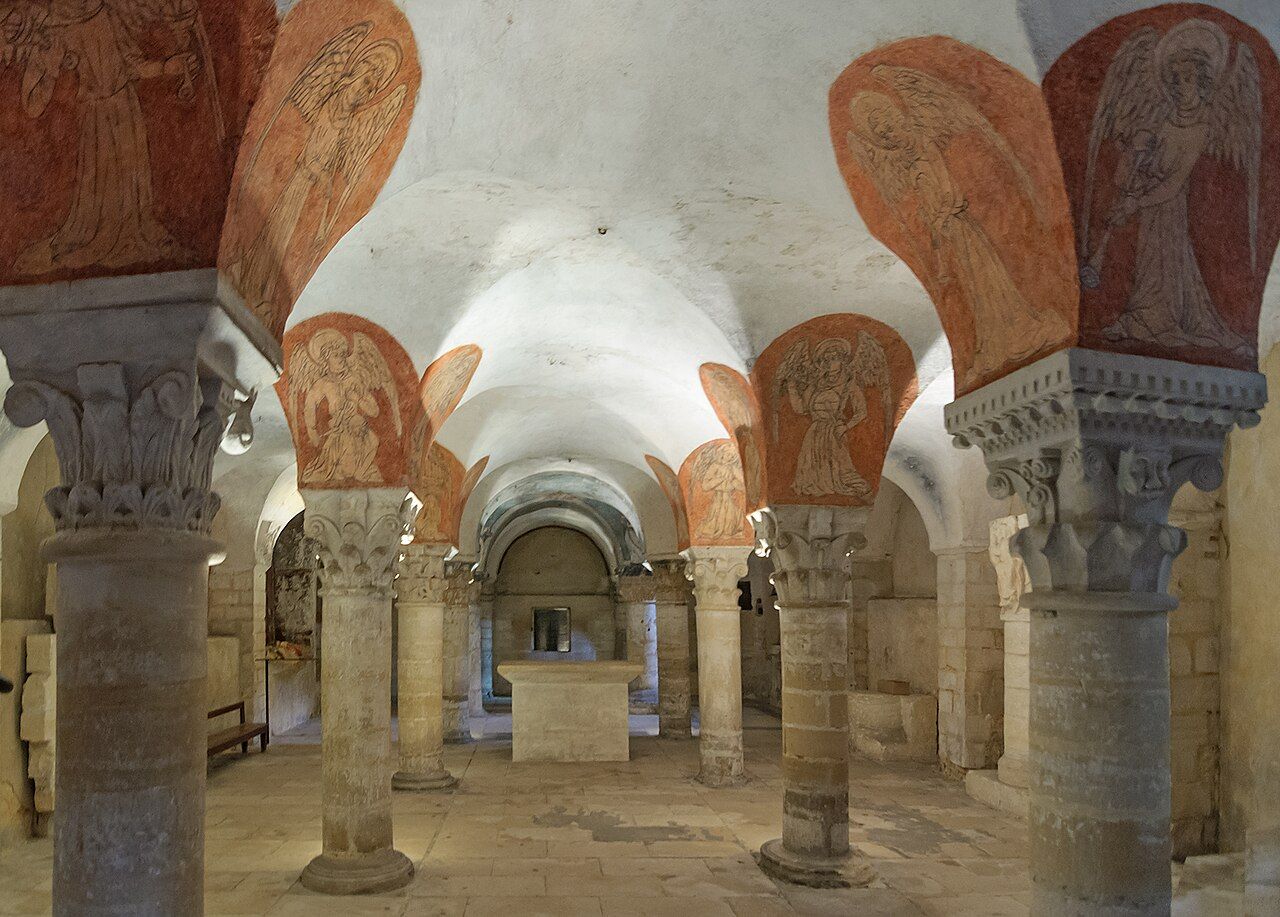

The cathedral of Notre-Dame de Bayeux was consecrated in 1077. William the Conqueror was present. What does that date offer? A fixed point in a building made across several centuries. The cathedral’s story is easier to read vertically than in a single glance. Begin below, then follow the changes upward.
What survives from the eleventh century? The crypt, and the lower parts of both west towers. Those pieces belong to the cathedral’s earliest surviving fabric. Their position matters: the building does not present one finished moment. It keeps older work underneath, and older work at its western edges.
What does the nave show? Round arches, Romanesque in form, with carved interlacing between them. The pattern gives the eye somewhere to pause. It also makes the arches feel less like repeated openings and more like a connected sequence. The stone keeps its own argument going.
Is the whole cathedral Romanesque? No. The upper levels and choir were rebuilt in Gothic style during the thirteenth century. That change is the useful distinction here: the lower remains and the rebuilt upper work belong to different periods. Look up from the arches and the story changes again.
What is waiting in the crypt? Paintings of angels playing music, made in the fifteenth century. They bring colour and figures into the oldest surviving part. The crypt is not simply a place to locate the beginning. It also holds its own later layer, which neatly refuses a tidy timeline.
What should the central tower tell us? Its top was rebuilt in the nineteenth century. That makes the skyline another chapter, rather than a preserved starting point. The cathedral’s height is not one uninterrupted medieval design. Its upper finish belongs to a much later rebuilding.
How does the cloth enter this account? For centuries, it was hung in the nave once a year. That habit joins the cloth to the cathedral’s interior, not merely to the town around it. The nave’s arches were also the setting for an annual event. A building’s use can be as telling as its stone.
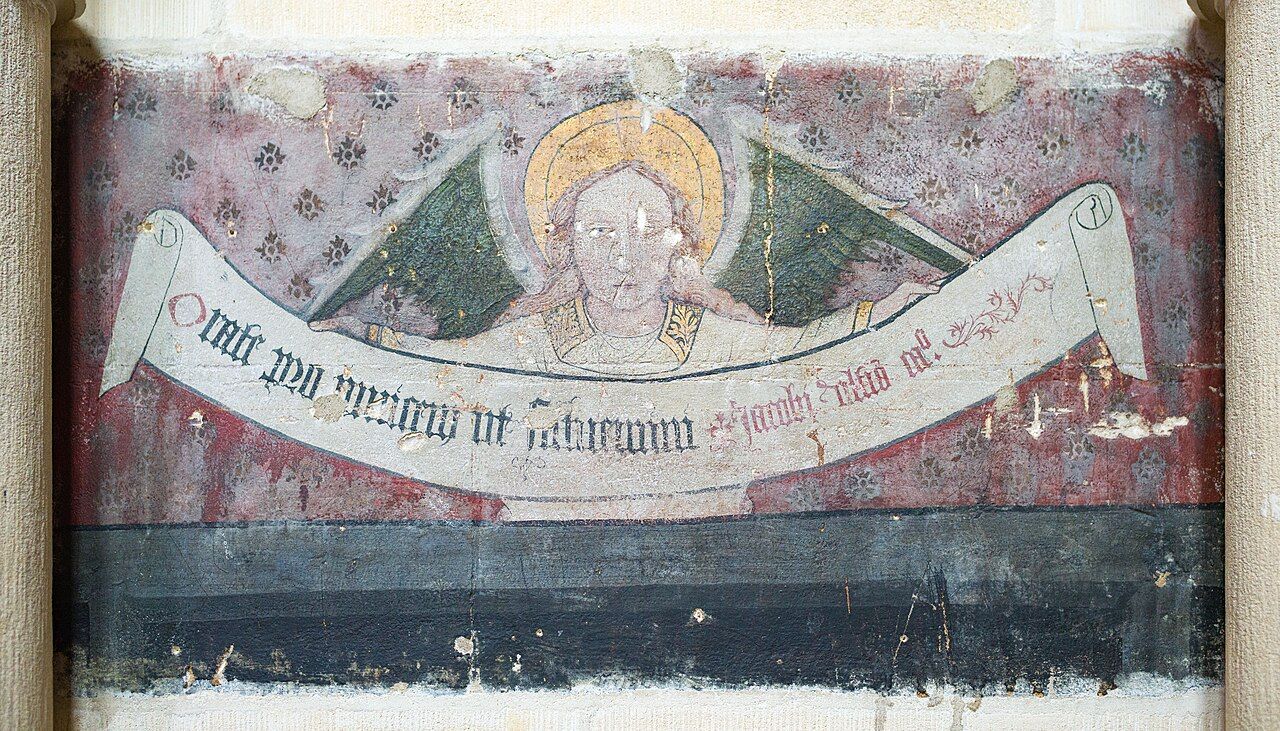

Does the sequence make the cathedral easier to read? I think so, provided the dates do not become a quiz. Eleven-century remains, thirteenth-century rebuilding, fifteenth-century paintings, then a nineteenth-century tower top: each period leaves a different clue. The building is less a single object than a record of work.
Where does it sit in Bayeux? In the centre of town, a few minutes’ walk from the river Aure. That places the cathedral within the town’s own scale. For a wider route through the streets, follow an hour-by-hour day in town.
What is worth lingering over? The shift from Romanesque arches to Gothic upper work, then the painted crypt. I would skip the hunt for one supposedly pure period. The appeal is precisely that the building does not stay still. Its layers make the simple answer impossible.
How might the cathedral sit beside the town’s other history? The nearby river offers one point of orientation, while another story follows Bayeux through a different period:
Pull the next thread: June 1944 in Bayeux: a town barely damaged
- Where: centre of Bayeux.
- From Bayeux: in town.
- River Aure: a few minutes’ walk away.
What did the cloth’s yearly return mean to the nave?
- How far from the cathedral in town
- Where exactly centre of Bayeux
Bayeux by the Aure: old lanes, wheels and timber • Bayeux lace, a bobbin at a time