Scene XVIII · Butter and apples
Teurgoule: the rice pudding that twists the mouth
A slow-baked pudding, a dark brown top and a name meaning “twists the mouth”. Meet its simple ingredients and its soft brioche companion.
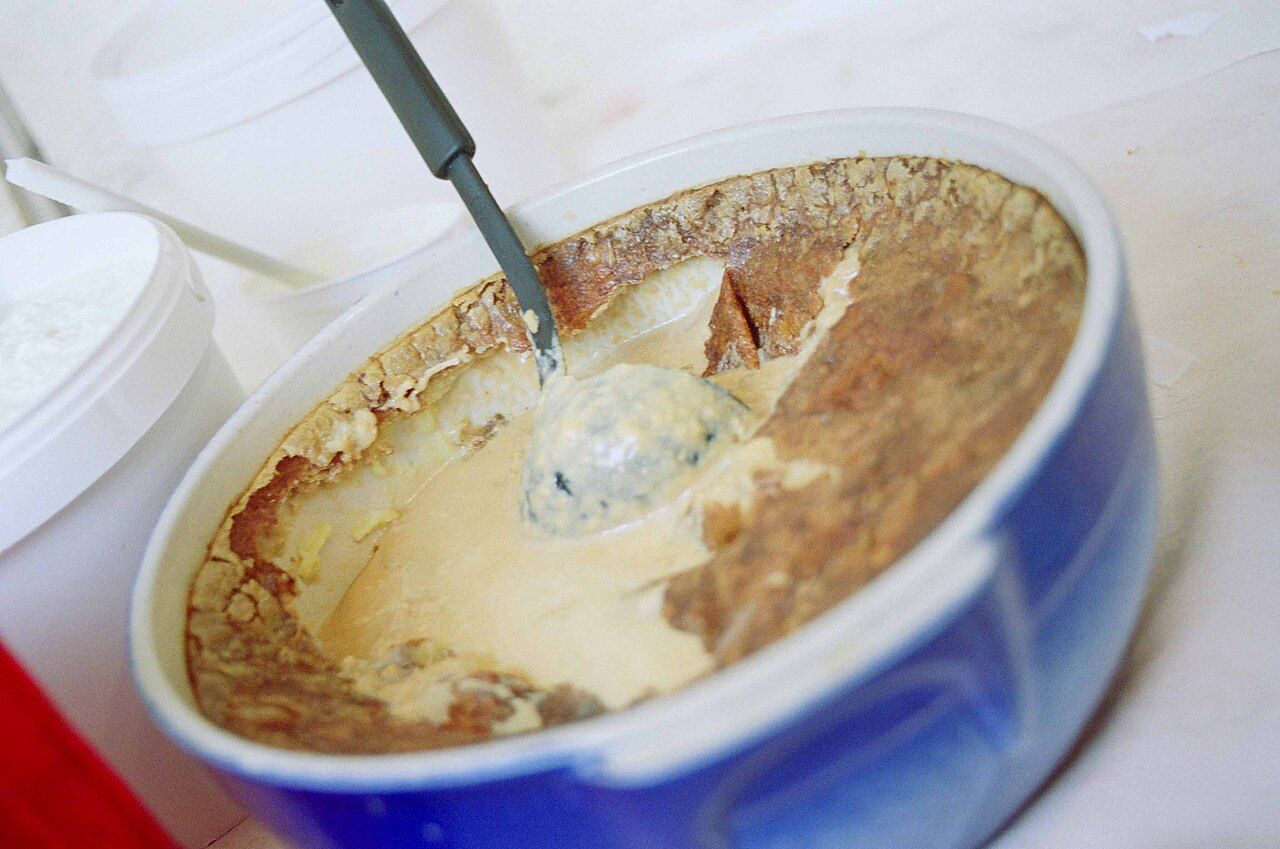

Morning: what is teurgoule? It is Norman rice pudding, baked slowly in the oven. Rice, whole milk, sugar and cinnamon make it. That is a short list, and I like its restraint. The pudding stays in the oven for several hours. Nothing in that description asks for embellishment.
Why does the method take so long? Teurgoule is baked very slowly, for several hours. That duration is part of the dish, not a footnote. During baking, a dark brown skin forms on top. It is the visible detail that makes the slow method easy to picture. I like a recipe with a clear finish, even when that finish takes patience.
Midday: what vessel holds it? It is baked in a wide earthenware dish. Wide and earthenware are useful details, not fussy extras. They tell us exactly what the pudding is baked in. I would keep those nouns close and leave the equipment list there. Rice pudding does not need a parade of utensils.
Is there more to the ingredient list? The facts stay pleasingly plain: rice, whole milk, sugar and cinnamon. No extra ingredient needs slipping into the answer. The recipe’s defining work is slow baking, in that wide dish. The top turns dark brown as it bakes. That is enough detail to understand what sets this pudding apart.
Late afternoon: what does the name mean? In Norman dialect, teurgoule means “twists the mouth”. It is a wonderfully direct name for pudding. The phrase sounds like a small puzzle, then gives its answer immediately. I would remember it before trying to remember any grand description. Sometimes the name does the useful work.
What is teurgoule often served with? Fallue, a soft Norman brioche. That is the companion to remember, rather than inventing a longer list. The pudding has rice, milk, sugar, cinnamon and its dark top. Fallue brings its own simple description: soft. I like a pairing whose names and textures need little explaining.
For another Norman thread, follow the story of a glass of pommeau.
Pull the next thread: Four named cheeses of Normandy: shape, rind and taste
- Where: Norman kitchens.
- From Bayeux: all around.
- How far from the cathedral all around
- Where exactly Norman kitchens
Caen: two abbeys, a castle and the memory of 1944 • Honfleur: the harbour and its wooden church